
Background
Way back in 1995, my parents bought me my very first PC: an Olivetti PCS 486. It sported a 25 MHz CPU and 4 MB of RAM, all housed in a compact desktop case. I absolutely loved that machine.
This was a period when personal computing felt like it was advancing at breakneck speed. New CPUs, graphics cards, and storage technologies seemed to appear almost weekly, and hardware specifications were rendered obsolete almost as soon as they were printed on the box. The upside of that rapid progress was that even modest upgrades could deliver very noticeable improvements. A little more RAM, a faster hard drive, or a new graphics card could completely transform a system.
Eventually, the time came to upgrade. I said goodbye to my first love, moved on to newer hardware, and like most people never really looked back.
A return to Olivetti
In recent years, though, I’ve found myself drifting back toward vintage hardware. I’ve gradually built up a small collection of Olivetti systems, mostly 286 and 386-era machines, and I’ve been patiently waiting for the day my saved eBay searches finally flag up that exact same 486 I had all those years ago.
While waiting for that glorious moment, something unexpected popped up.
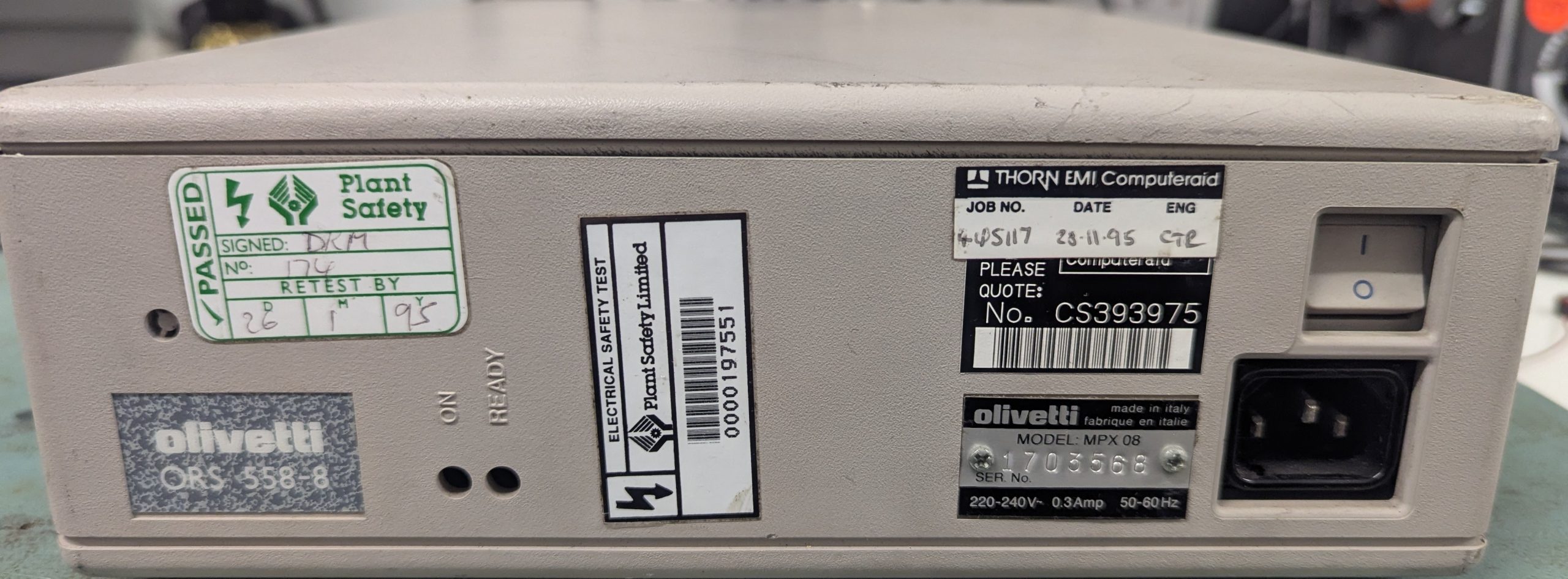
I received a notification for an “Olivetti MX-08”. By this point, I was already fairly familiar with most Olivetti PC models, but this name didn’t ring any bells at all. That’s because it isn’t actually a PC. It is a Point-of-Sale (POS) machine.
That discovery alone was enough to get my attention.
The actual label for this is ORS 558-8. Im unsure why it was labelled as the MX-08 but I will refer to it as ORS 558 from here on.
Why the ORS 558?
There is remarkably little information available about the Olivetti ORS 558. Documentation is scarce, photographs are limited, and technical details are almost non-existent online. That lack of information made it all the more interesting. While the machine itself is completely obsolete and practically useless by modern standards, it still deserves to be better understood and documented.
This series is my attempt to do exactly that. It is a deep dive into a forgotten piece of hardware history, purely for curiosity’s sake.
First job: preserve the firmware
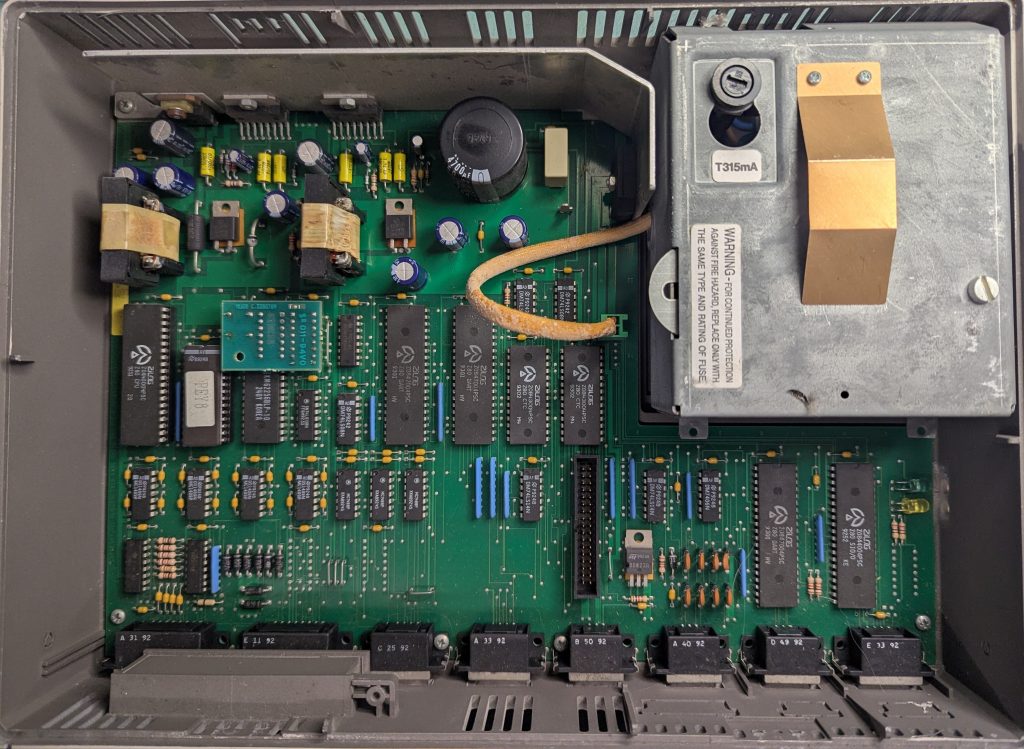
Opening up the ORS-558 reveals a refreshingly simple design. There is not much inside. Just a handful of Zilog ICs, an EPROM, and a RAM chip. No sprawling motherboard and no complex expansion slots. Just the essentials.
My very first priority was preservation.
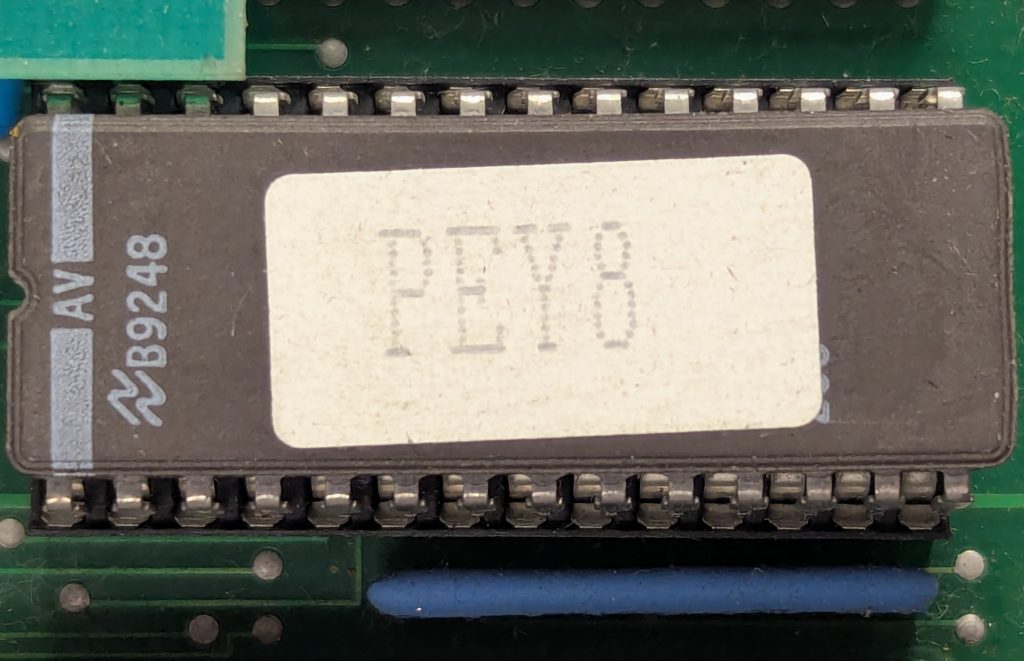
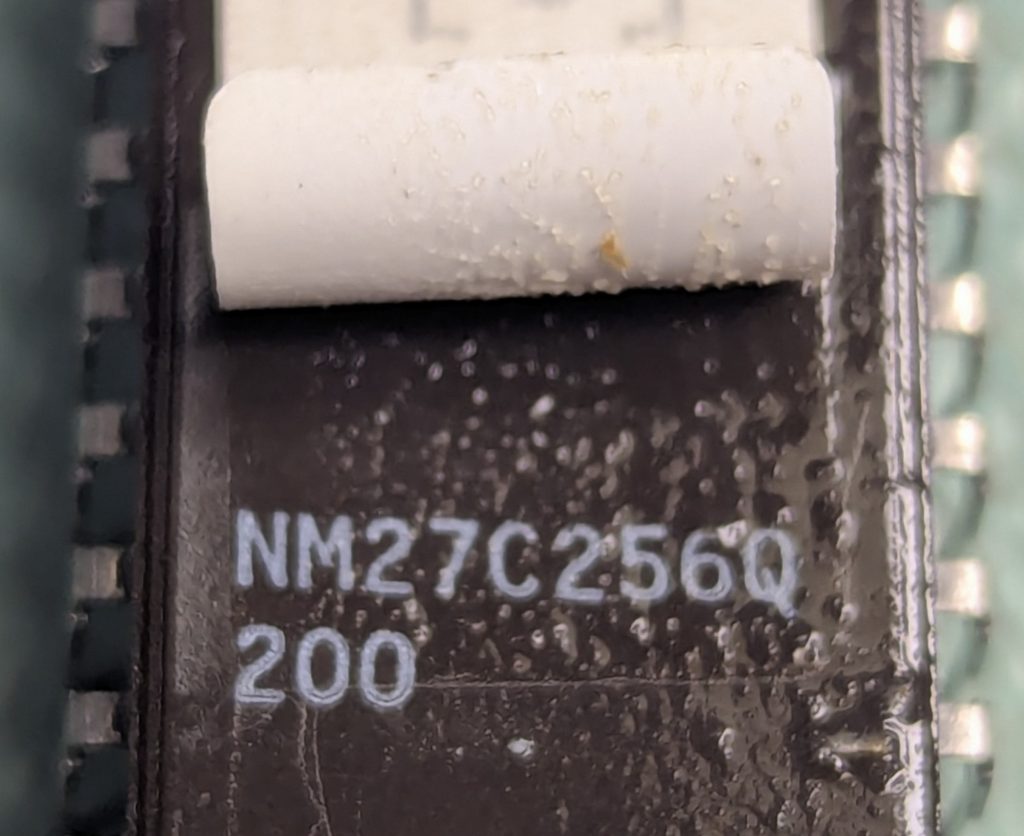
I removed the EPROM and dumped its contents as soon as possible. The chip carries a handwritten label marked “PEY8”, with the actual device type hidden underneath. With a bit of patience, some isopropyl alcohol, and a carefully wielded razor blade, I managed to lift part of the label without damaging it.
Underneath, the chip revealed itself to be a 27C256 EPROM.
A first look inside
Loading the dump into a hex editor immediately showed some promising signs. Among the binary data were a few readable ASCII strings, including what appears to be a name: Salsi Adriano. Whether that is a developer, technician, or something else entirely is unclear. A quick internet search did not turn up anything useful, so for now it remains a small mystery.
To sanity-check the dump, I loaded the firmware into Ghidra and attempted a disassembly. The code disassembled cleanly, with no obvious corruption or anomalies, which gave me confidence that the EPROM read was good.
What’s next?
While having a clean disassembly is a good start, it does not get me very far on its own. Without understanding how the hardware is wired and how the CPU, memory, I/O, and peripherals are connected, there is only so much I can learn from the code.
So the next step is clear.
In Part 2, I will start documenting the hardware itself by creating at least a partial schematic of the ORS 558. That means breaking out KiCad, tracing signals, identifying address and data buses, and slowly building up a picture of how this machine actually works.
Resources
If anyone is interest, a link to the firmware can be downloaded HERE
Leave a Reply